
Val Verde Parole Versus Probation
Parole is release from a Texas prison while part of the sentence remains. The Texas Board of Pardons and Paroles makes release decisions, and the TDCJ Parole Division manages supervision. Mandatory supervision is another state release form set by statute and Board review. Probation, which Texas offices often call community supervision, comes from a trial court. In Val Verde County, the 63rd/83rd Judicial District Community Supervision and Corrections Department, or CSCD, manages that court-ordered status.
The key question is the source of the order. A TDCJ release certificate and offender record point to parole or mandatory supervision. A Val Verde court judgment and CSCD file point to probation. Someone may leave the county jail on bond with a pending case and have bond conditions, but that is not automatically probation. Likewise, a transfer from the county facility to TDCJ is not parole because incarceration continues.
| Point | Parole | Probation |
|---|---|---|
| Authority | Texas Board of Pardons and Paroles | 63rd or 83rd District Court or another sentencing court |
| Local office | TDCJ Del Rio District Parole Office | Val Verde County CSCD |
| Record to confirm | TDCJ details and release certificate | Court judgment and CSCD confirmation |
| How it ends | Discharge, revocation, or other TDCJ action | Court-ordered completion, discharge, or revocation |
- Parole
- Conditional prison release before the sentence fully expires.
- Probation
- Court-ordered community supervision, often imposed instead of confinement.
- Discharge
- The formal end of the sentence or supervision term.
- Absconder
- A supervised person alleged to have stopped reporting or left supervision without approval.
Check Val Verde Release Supervision
Start with identity, not a similar name. A date of birth, TDCJ number, state identification number, cause number, and county of conviction can separate people who share a name. The TDCJ Inmate Search is the first state channel for a person released from TDCJ. Open Offender Information Details and review status, projected or scheduled information, and Parole Review Information when available. A fully discharged person may no longer remain easy to find in the live tool.
Use the court route for local probation. Val Verde did not expose a verified official public criminal name-search portal in the pages researched. The District Clerk holds criminal papers for the 63rd and 83rd District Courts. Request the judgment, supervision order, modifications, revocation papers, and discharge entry. Texas eFile should not be treated as a public name-search database.
- Identify whether the person left county custody, TDCJ custody, or another system.
- Match the full name with a birth date, TDCJ or SID number, booking number, or court cause number.
- For state release, check TDCJ details and the Parole Review Information link.
- For probation, obtain the signed Val Verde court order and contact CSCD.
- Ask the named office whether it supervises the person and which public status facts it can confirm.
- Obtain the final discharge or revocation record instead of inferring the result from a missing search entry.
Val Verde Supervision Offices
Val Verde County has two distinct reporting offices in Del Rio. Send a state releasee to the parole office and a person placed on community supervision by a local court to CSCD. Calling the wrong office can lead to a false conclusion that no supervision exists. Office staff may limit person-specific information, but they can explain procedure and direct a records request.
The TDCJ Del Rio District Parole Office is the local state parole contact. The Val Verde County CSCD handles probation. BPP’s review status line is useful before release, while Review and Release Processing addresses later release processing. Neither local office should be asked to rewrite the official court or TDCJ record.
Val Verde County CSCD
239 FM 2523
Del Rio, TX 78840
Mail: PO Box 4249, Del Rio, TX 78841
830-774-7554
Monday-Friday, 8:00 a.m.-5:00 p.m.
Del Rio District Parole Office
903 E. 12th Street
Del Rio, TX 78840
830-775-4516
Fax: 830-774-0736
The official Val Verde probation page shows the local office context in the captured source below.
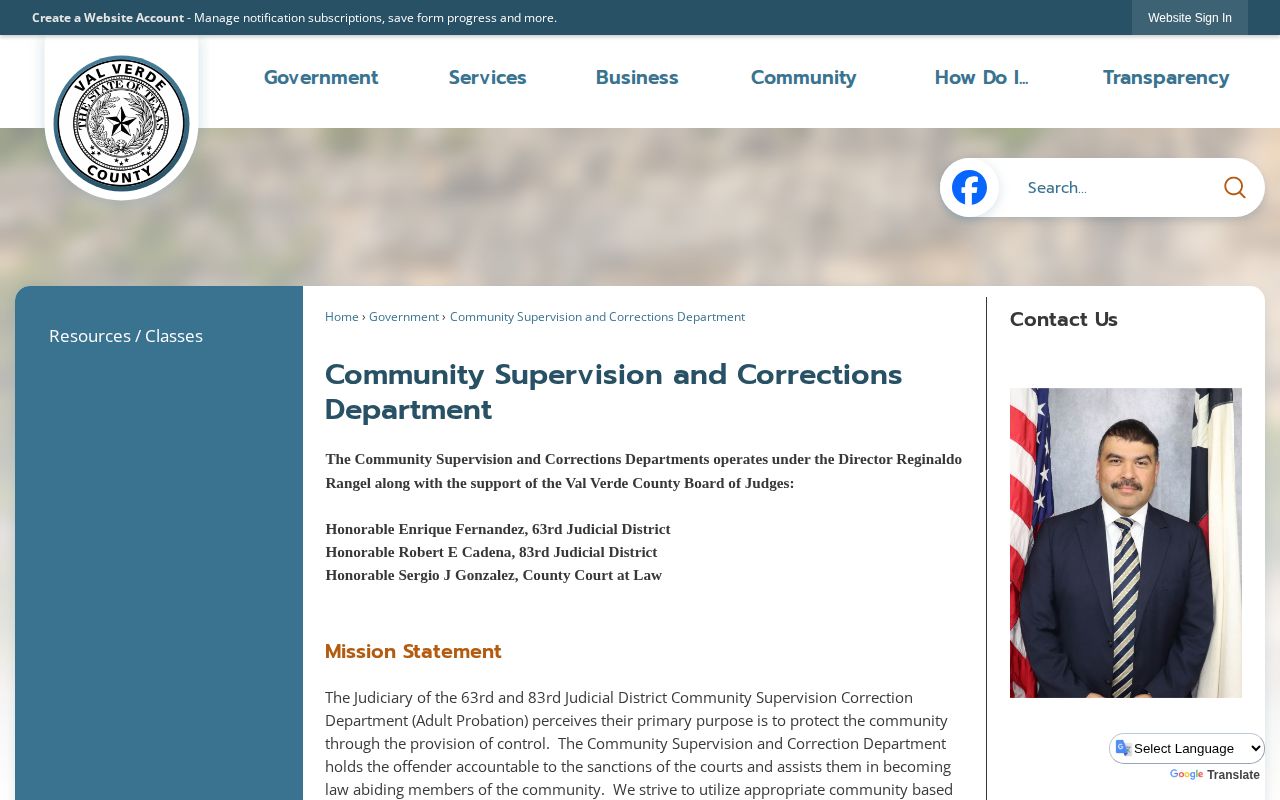
The image helps identify the county probation channel, but the court order remains the controlling record for a particular case.
Reporting at Val Verde CSCD
The local CSCD has unusually specific reporting guidance. Its official reporting FAQ asks people not to bring weapons, including work tools such as knives, and not to carry backpacks or purses into the office. It also asks reporting people not to bring children. These are practical office rules, not added supervision conditions, and a person should confirm current instructions before arriving.
Those local directions underscore why parole and probation cannot be merged into one generic office. A TDCJ parolee follows the parole officer’s reporting plan. A probationer follows the CSCD and court order. Each person should use the phone number on current paperwork, report as directed, and ask the assigned officer about any conflict before missing an appointment.
Note: Office rules can change, so confirm them with CSCD before a Val Verde County probation visit.
Val Verde Supervision Status Changes
Conditions may cover reporting, travel, treatment, fees, residence, contact, or other conduct stated in the release certificate or court order. The exact terms are person-specific. A public summary must not replace the signed document. For parole, protected release-plan material and parts of parole files may be withheld under Texas Government Code section 508.313. For probation, obtain the judgment and later modification orders from the court.
A violation allegation does not equal a final revocation. An absconder label generally means the agency alleges that the person stopped reporting or cannot be located. A warrant can follow, but current warrant status should be confirmed with the issuing authority. If custody resumes, the county jail, TDCJ, or another holding agency may show a new episode. Texas IVSS-Counties may send a custody or supervision event for a participating agency, though Val Verde participation was not confirmed during research.
When the record contains a favorable BPP vote, read the exact code. FI and RMS codes can signal Board intent, yet programs, release-plan approval, audits, detainers, or new facts may still delay release. Texas does not publish a person-by-person formal hearing calendar because panels review and vote files individually. The BPP review results material and TDCJ record are better sources than a supposed local hearing list.
Confirm Val Verde Supervision Discharge
Supervision ends through an official act, not just the passage of an expected date. A parolee may reach sentence discharge, receive another authorized discharge outcome, or face revocation. A probationer may complete the term and receive a court or CSCD discharge record, or the court may modify or revoke the order. Ask for the actual document and effective date.
For a TDCJ history that is no longer clear online, use the no-charge inmate-information email described by TDCJ. Supply the full name and seven-digit TDCJ number, or exact birth date, or approximate age and county of conviction. A formal Public Information Act request can seek the actual release date, discharge date, release certificate, and public sentence fields. The Val Verde County released inmate search explains how county, court, state, and federal records fit together.
Texas Government Code section 552.029 identifies specific TDCJ facts that remain public, including identification, sentence, conviction court, earliest and latest possible release dates, and parole information. That list does not open the whole parole file. Section 552.134 protects other inmate information, and section 508.313 restricts parole records. A focused request should ask for the public sentence, actual release, discharge, and supervision fields while accepting lawful redactions.
For county probation, request the signed judgment and each later order by cause number. A clerk docket can show that an order was entered, but the signed instrument gives the controlling terms. If the expected end date and the current order differ, ask CSCD or the clerk for the modification, extension, early-discharge order, or revocation document that explains the change. Do not infer completion merely because routine reporting has stopped.
A person can also finish one supervision term while another case or authority remains active. Match the jurisdiction, cause number, sentence, and effective date on every document. A TDCJ discharge does not resolve a separate Val Verde probation case, and a local probation discharge does not end an unrelated state or federal term.
Keep custody and supervision dates separate. A county booking-out date ends a local custody episode. A TDCJ release date ends prison custody. A later supervision discharge ends the legal supervision term. Those three dates can all be correct.
Val Verde Review Status Records
The BPP status line can help identify a pending review result, but it does not replace a release certificate or discharge record. Callers should have the name, TDCJ-CID number, and date of birth ready. Public Board meeting agendas and minutes concern agency governance; they are not a calendar of hearings for a named Val Verde releasee. Preserve the exact voting code and confirm later release processing separately.
Keep the date, agency, cause number, and supervision type together so later records can be compared without merging separate cases.